









Added to Cart
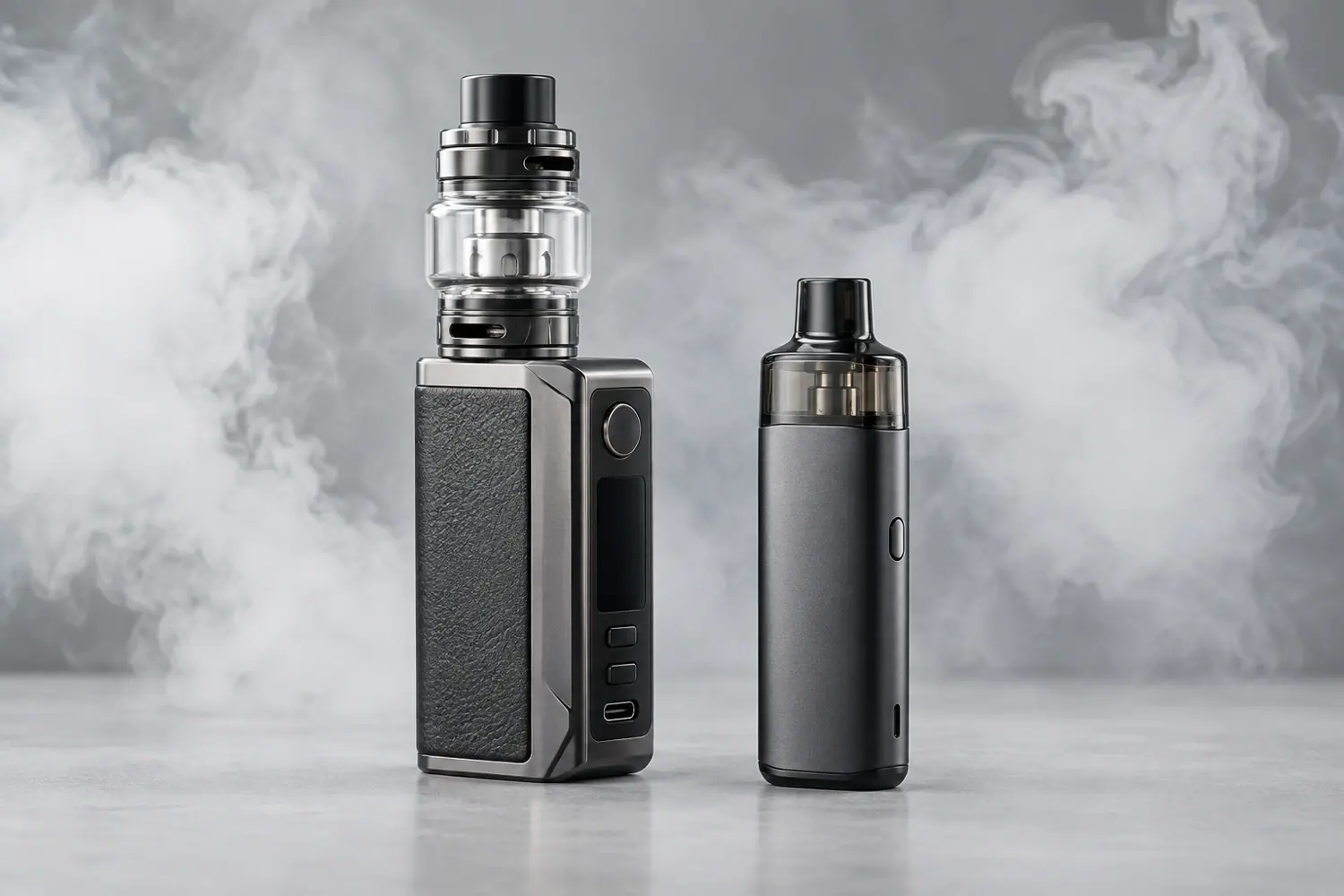
If you want bigger clouds, start with a DTL vape with open or adjustable airflow and a coil built for higher aerosol output.
With refillable devices, that usually means a mesh sub-ohm coil and a higher-VG e-liquid. Wattage matters too, but the number on the front of the mod is not the number to chase. Use the range made for the coil you actually have.
Pre-filled devices are different. You cannot swap the liquid ratio or choose another coil, so focus on DTL capability, airflow, coil design and power modes. Puff count tells you roughly how much use the device is designed to provide. Battery capacity tells you more about runtime. Neither tells you how dense a single cloud will be.
| Specification | What to Look For | Why It Matters |
|---|---|---|
| Draw style | DTL | Moves more air through the atomizer than a tight MTL draw |
| Coil | Mesh or another coil designed for higher aerosol output | Heating area and liquid supply affect how much liquid can be aerosolized |
| Resistance | Often sub-ohm in refillable DTL hardware | Only makes sense when read with coil design and rated wattage |
| Power | Stay inside the coil manufacturer’s range | Extra wattage only helps while the wick and airflow can handle the heat |
| E-liquid | Higher-VG liquid where the device supports it | VG-rich aerosol usually looks denser |
| Airflow | Open or adjustable | Controls cooling and how much air moves through the coil |
Start With DTL
DTL means direct to lung. The draw is open, so more air can move through the coil during each puff.
MTL, or mouth to lung, feels tighter. RDL, or restricted direct lung, sits somewhere between the two.
| Draw Style | Airflow | Typical Hardware | Relative Cloud Output |
|---|---|---|---|
| MTL | Tight | Compact pod, usually higher-resistance coil | Lower |
| RDL | Moderately open | Pod or compact mod | Medium |
| DTL | Open | Sub-ohm tank, DTL pod or integrated DTL device | Higher |
If clouds are the main thing you care about, buy a device made for DTL. Trying to turn a tight MTL pod into a cloud device by simply pushing more power through it is usually the wrong route.
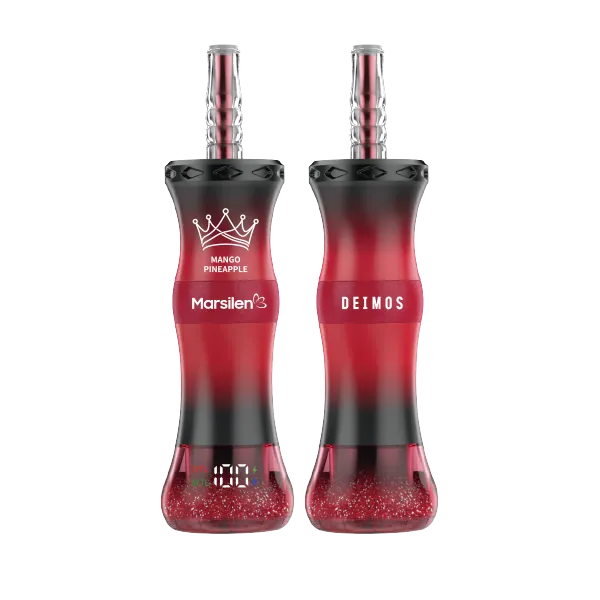
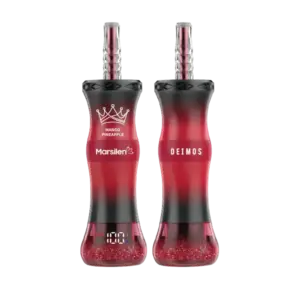
Marsilen’s Deimos is a useful example. Its current specification lists DTL / MTL operation, a 0.4Ω Mesh Coil and a 1200mAh rechargeable battery. The selectable draw style tells you more about how the device is meant to feel than the headline puff number does.
Lower Resistance Does Not Automatically Mean Bigger Clouds
“Sub-ohm” simply means the coil resistance is below 1Ω. It does not mean the lowest resistance wins.
Many refillable DTL setups use coils somewhere around 0.15–0.4Ω, but that range is only useful as a rough reference.
A 0.15Ω coil with poor airflow and weak liquid supply can perform worse than a 0.3Ω mesh coil with a larger wick area and a proper DTL airflow path.
Look at the whole coil:
- coil construction;
- heating area;
- recommended wattage;
- airflow;
- wicking capacity;
- compatible e-liquid.
Laboratory testing has found different aerosol-emission profiles when coil resistance and operating power were changed together. That is another reason not to treat resistance as a stand-alone cloud score.[1]
Why Mesh Coils Show Up So Often in DTL Vapes
In many commercial coils, mesh spreads the heating structure over a fairly broad area of saturated wick.
That gives the coil more surface to work with. It can support strong aerosol output without relying only on very low resistance.
Mesh is not magic, though. A mesh coil with poor airflow or weak liquid supply can still perform badly. The coil, wick, airflow and power all have to work together.
Current Marsilen products use several mesh setups. Deimos lists a 0.4Ω Mesh Coil, while Mars Super DTL lists Dual Crystal Mesh Coils.
Mars PRO 30K currently lists Mesh Coil heating, a 10mL refillable pod, a 600mAh rechargeable battery and USB Type-C charging. Its own product page does not publish a coil-resistance figure, so there is no good reason to guess one.
Comparing DTL models for retail or distribution?
Send the target model, destination market and expected quantity. Current product configuration, stock and business pricing can then be checked against the actual order.
Use the Coil Rating, Not the Biggest Wattage Number
Say a coil is rated for 50–70W. That is the range that matters, even if the mod itself can reach 100W or 200W.
| Specification | Device A | Device B |
|---|---|---|
| Maximum device output | 80W | 200W |
| Installed coil rating | 50–70W | 50–70W |
| Actual setting | 60W | 60W |
Both coils are getting 60W. The extra 120W available on Device B is just unused headroom. It does not somehow sneak into the cloud.
More power can increase aerosol output while the wick keeps up with liquid demand and the airflow keeps the coil under control. Push beyond that point and the wick may struggle to resaturate. The result can be excess heat and dry-puff conditions.[2]
Laboratory reviews have also found that power, voltage, atomizer design and operating conditions can change carbonyl emissions.[3]
Mars Super DTL shows why wattage needs context. Its current product specification lists:
- 21W Smooth mode;
- 42W Boost mode;
- adjustable airflow;
- Dual Crystal Mesh Coils;
- 1200mAh rechargeable battery;
- 18mL published e-liquid capacity.
That 42W number is only one piece of the setup. You cannot compare it fairly with 60W or 80W on another device unless you also compare the coil and airflow.
Marsilen’s published specifications confirm the power modes. They do not provide an independent measurement of cloud volume, so it would be misleading to turn “42W” into a guaranteed cloud-size claim.
Airflow Matters More Than People Think
Airflow does more than make the draw feel loose or tight. It cools the heating area, mixes with the aerosol and carries that aerosol through the mouthpiece.
Too little airflow can make the coil run hotter and the draw feel cramped. Go too far the other way with low output and the aerosol can feel thin and cool.
This is why adjustable airflow is useful. You can change cooling and draw resistance without changing the coil.
Mars Super DTL combines adjustable airflow with 21W and 42W modes, so both variables can be changed within the device’s published setup.
70VG/30PG Is a Common Starting Point for Refillable DTL
Vegetable glycerin, or VG, is thicker than propylene glycol, or PG. It also tends to make the visible plume look denser.
Controlled research has shown that PG/VG ratio changes aerosol particle behavior and light scattering. Higher-VG aerosol can look much denser even when aerosol mass does not rise by the same amount.[4]
| VG / PG | Common Application | Main Difference |
|---|---|---|
| 50 / 50 | Many small MTL pods | Lower viscosity |
| 70 / 30 | Many refillable DTL setups | Higher viscosity and visibly dense aerosol |
| 80 / 20 | Some cloud-focused refillable setups | Very high viscosity and greater wicking demand |
More VG is not automatically better. Thick liquid has to reach the wick fast enough.
If a coil was built around thinner liquid, an 80VG mixture may feed too slowly. That is when performance starts falling off and dry hits become more likely.
Power and PG/VG ratio also influence particulate emissions, so changing the liquid ratio changes more than how the cloud looks.[5]
Use the liquid type specified for the refillable device. Do not pour e-liquid into a sealed product that was never designed to be refilled.
Sub-Ohm Tank or DTL Pod?
| Format | Choose It When |
|---|---|
| Sub-ohm tank + regulated mod | You want to choose the coil, wattage, airflow and e-liquid separately |
| DTL pod / integrated DTL device | You want open airflow and higher aerosol output with fewer settings and removable parts |
| RDL pod | You want more aerosol than MTL without a fully open DTL draw |
| MTL pod | You prefer a tighter draw and lower aerosol volume |
A sub-ohm tank gives you more control, but it also gives you more things to maintain. A DTL pod cuts down the fiddling. For many people, that trade-off matters more than squeezing out the absolute largest possible cloud.
If you are deciding between fixed-format and refillable hardware, Marsilen’s disposable vs refillable vape guide goes into the differences in filling, maintenance and hardware control.
With Pre-Filled Devices, Judge What You Can Actually Verify
A sealed or pre-filled device fixes the liquid, coil and tank design for you.
So the useful questions are simple:
- Is it DTL or MTL?
- Is the airflow fixed or adjustable?
- What kind of coil does it use?
- Does it have more than one power mode?
- What is the battery capacity and charging method?
Puff count is not a cloud-density test. It is an estimate of how much use the manufacturer says the device can provide under its stated conditions.
Deimos currently publishes DTL / MTL operation and a 0.4Ω Mesh Coil. Mars Super DTL publishes adjustable airflow, Dual Crystal Mesh Coils and 21W / 42W modes. Those details tell you more about how the hardware is meant to produce aerosol than the headline puff figure does.
Need the exact specification for a business order?
Include the destination country, model, quantity and any required product documents. The current market version and batch-specific configuration can then be checked before the order is finalized.
Battery Capacity Mainly Changes Runtime
Battery capacity is shown in milliamp-hours, or mAh. A larger number means more stored charge under the battery’s rated conditions.
It does not mean a bigger cloud.
Current Marsilen specifications make that easy to see:
- Mars PRO 30K: internal 600mAh rechargeable battery;
- Deimos: 1200mAh rechargeable battery;
- Mars Super DTL: 1200mAh rechargeable battery with 21W and 42W modes.
A 1200mAh battery does not make twice the cloud of a 600mAh battery. It simply starts with more stored charge. How long that charge lasts depends on how much power the device pulls during use.
The Marsilen guide to rechargeable vape battery life explains what changes charging frequency and real-world runtime.
More Aerosol Usually Means More E-Liquid Used
If a device aerosolizes more liquid in each puff, it will use liquid faster. Higher operating power can also increase vaporization rate when the rest of the setup stays comparable.[6]
But there is a catch. A cloud that looks bigger does not automatically mean the device consumed more liquid.
VG-rich aerosol can scatter more light and look thicker even without a proportional rise in aerosol mass.[4]
So if two devices produce clouds that look different, the reason could be liquid consumption, PG/VG ratio, particle behavior, airflow, or several of those things at once.
There is no useful universal “mL per day” number. Puff length, puff frequency, power, airflow and atomizer design vary too much.
A Bigger Cloud Does Not Tell You Nicotine Intake
Cloud size is a bad way to estimate nicotine exposure.
Nicotine emissions depend on nicotine concentration, device power, PG/VG ratio, puff duration and atomizer behavior. Controlled testing has found that all of those variables can change nicotine emission rate.[6]
A large DTL puff and a small MTL puff should not be treated as equivalent just because both liquids show the same nicotine concentration.
If your question is about nicotine type rather than cloud size, Marsilen’s guide to nicotine salts explains nicotine formulation separately from device style.
The Cloud Is Aerosol, Not Water Vapor
CDC states that e-cigarette aerosol is not harmless water vapor. Depending on the product, it can contain nicotine, ultrafine particles, volatile organic compounds, metals and other potentially harmful substances.[7]
A bigger-looking cloud does not mean a cleaner or safer cloud.
CDC also states that no tobacco product, including e-cigarettes, is safe. Most e-cigarettes contain nicotine, which is highly addictive. Youth, young adults and pregnant people should not use e-cigarettes, and adults who have never used tobacco products should not start.[8]
High-Output Devices Need Proper Battery Handling
Use the battery type, charging equipment and charging method specified for the device.
If the device, battery or cable is physically damaged, stop using it. The same applies if the device becomes unusually hot while charging.
FDA says vape battery fires and explosions appear uncommon, but they can cause serious injury. Its guidance recommends using batteries made for the device and charging on a clean, flat surface away from materials that can catch fire easily.[9]
For charging, leakage or overheating problems tied to a specific model, use the Marsilen Help Center instead of following instructions written for a different device.
Why a Cloud Setup Can Feel Weak
| Problem | What Happens | What to Check |
|---|---|---|
| Power above coil rating | Liquid may not reach the wick fast enough | Return to the manufacturer’s stated range |
| Power below the coil’s intended range | Heating can feel slow and aerosol output weak | Check the exact coil specification |
| Airflow too restricted | The coil runs hotter and the draw feels tighter | Open the airflow within the device’s adjustment range |
| Liquid too thick | The wick may resaturate too slowly | Use a VG/PG ratio supported by the coil |
| Repeated long draws | The wick may not fully recover between activations | Give the wick time to resaturate |
| Choosing by resistance alone | You ignore airflow, heating area, liquid delivery and power requirements | Compare the complete coil and device specification |
Frequently Asked Questions
What type of vape produces the biggest clouds?
A DTL vape with open airflow and a coil designed for higher aerosol output usually has more cloud potential than a tight MTL pod. In refillable hardware, sub-ohm tanks and DTL pods are the main formats to compare.
Does a lower-ohm coil make bigger clouds?
Not automatically. Resistance only tells part of the story. Heating area, rated wattage, airflow and liquid delivery matter just as much.
Can a 40–50W vape produce a large cloud?
Yes, if the hardware was built around that output. There is no universal wattage where a vape suddenly becomes a “big cloud” device. Mars Super DTL, for example, publishes a 42W Boost mode with adjustable airflow and Dual Crystal Mesh Coils, but that is a hardware specification rather than a measured cloud-volume guarantee.
Does higher VG make clouds look bigger?
It can. Higher-VG aerosol tends to scatter more light, so the plume can look denser. The trade-off is thicker liquid, which means the coil must be able to wick it properly.[4]
What Vape Is Best for Bigger Clouds?
A DTL vape with open or adjustable airflow and a coil built for higher aerosol output is the most sensible place to start.
With refillable hardware, compare the coil design, rated wattage, airflow and e-liquid compatibility together. Do not buy purely because one coil has a lower resistance or one mod has a bigger wattage number.
With pre-filled hardware, check the DTL mode, airflow, coil design and published power options. Deimos currently lists DTL / MTL operation with a 0.4Ω Mesh Coil. Mars Super DTL lists adjustable airflow, Dual Crystal Mesh Coils and 21W / 42W modes.
Puff count tells you about rated usage capacity. Battery mAh mostly tells you about runtime. VG can change how dense the plume looks. None of those numbers works as a cloud-performance score on its own.
E-cigarette clouds are aerosol, not harmless water vapor. Nicotine is addictive, and adults who do not currently use tobacco or nicotine products should not start vaping just to produce bigger clouds.[8]
Need to compare current Marsilen models for a wholesale order?
Send the destination market, target model and expected quantity. The team can check the current product version, availability and business pricing before you place the order.