












Added to Cart
If you already vape, there’s a simple way to work out roughly how much puff capacity you need: take your average daily puff count and multiply it by the number of days you want the device to last.
If you use around 150 puffs a day, the math looks like this:
- 2,100 puffs for 14 days
- 4,500 puffs for 30 days
- 9,000 puffs for 60 days
That gives you a rough capacity target. It does not tell you how much you should vape. There is no established safe daily puff limit, and most e-cigarettes contain addictive nicotine.[1]
Calculate the Puff Capacity You Need
| Your Current Use | 14 Days | 30 Days | 60 Days |
|---|---|---|---|
| 100 puffs/day | 1,400 | 3,000 | 6,000 |
| 150 puffs/day | 2,100 | 4,500 | 9,000 |
| 200 puffs/day | 2,800 | 6,000 | 12,000 |
| 250 puffs/day | 3,500 | 7,500 | 15,000 |
| 300 puffs/day | 4,200 | 9,000 | 18,000 |
These daily figures are only examples for doing the math. They are not “light,” “normal,” or “heavy” vaping levels.
If your device has a puff counter, check it for a few normal days. Then work out the average. Your own number is much more useful than copying someone else’s.
Questions about a device you already use?
Find common guidance for charging, weak flavor, airflow and leaks, or review the details to prepare before contacting product support.
A Puff Is Not a Fixed Nicotine Dose
A puff counter only counts activations. It does not tell you how much nicotine your body absorbed.
The amount of nicotine in a puff changes with the device and how long you draw on it.[2]
A 1-second draw and a 4-second draw may both show up as one puff on the screen. They are not the same thing.
In one controlled study, experienced e-cigarette users took puffs that lasted about 3.5 seconds on average. Smokers with little e-cigarette experience averaged about 2.3 seconds. The groups took a similar number of puffs, but their plasma nicotine levels were different.[3]
Another review looked at 100 experimental device and liquid conditions. Measured aerosol nicotine yield ranged from about 0.01 to 6.64 mg over 15 puffs. Device power, puff duration and nicotine concentration all affected the result.[4]
Those are laboratory aerosol yields, not the amount a person will necessarily absorb.
So 100 puffs on one vape may give a very different nicotine exposure from 100 puffs on another.
How Long Do 5,000, 10,000 or 20,000 Puffs Last?
Use this rough calculation:
advertised puff count ÷ your daily average = estimated days of capacity.
At 200 puffs a day:
- 5,000 puffs ≈ 25 days
- 10,000 puffs ≈ 50 days
- 20,000 puffs ≈ 100 days
That is just the math based on the label. Real device life can be different.
Longer puffs can increase aerosol and nicotine yield under similar conditions.[5] So if you take long pulls, you may not get the same real-world puff count as someone who takes short ones.
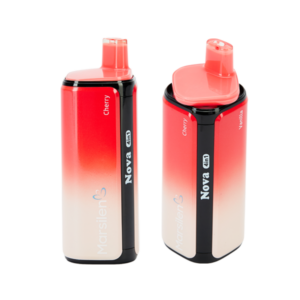
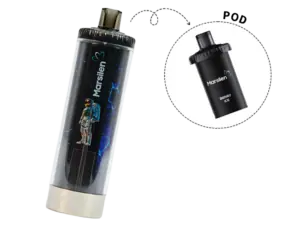
Marsilen lists the NOVA 4in1 at up to 80,000 puffs. The product page also says the actual count can vary with puff duration, how often you use it and charging conditions.
Battery life is a separate issue. A rechargeable device may be charged several times while there is still e-liquid left. The guide on how long a rechargeable vape lasts explains battery runtime and total device life separately.
Puff Count Is Not Nicotine Strength
Puff count tells you roughly how much use a device is rated for. Nicotine strength tells you how concentrated the nicotine is in the e-liquid.
| Specification | What It Tells You |
|---|---|
| Puff rating | Manufacturer-rated capacity |
| Nicotine concentration | Nicotine concentration in the liquid |
| E-liquid volume | Amount of liquid in the device |
| Battery capacity | Size of the rechargeable power source |
| Coil resistance | Electrical resistance of the heating coil |
A controlled study used liquids containing 0, 8, 18 and 36 mg/mL nicotine with the same 3.3 V device and 1.5Ω dual-coil cartomizer. After the first 10-puff session, mean plasma nicotine concentrations were 5.5, 17.8, 25.9 and 30.2 ng/mL.[6]
That is not a conversion chart for today’s products. It simply shows that nicotine concentration changes exposure even when the puffing setup is controlled.
Power changes the picture too. Research shows that device power, nicotine strength and puff duration can work together, so nicotine concentration alone does not tell you what every device will deliver.[7]
When you compare two vapes, look at puff rating, nicotine concentration, liquid volume and device type together.
Do You Actually Need a High-Puff Vape?
If you use about 150 puffs a day and want 30 days of capacity, your rough target is 4,500 puffs.
A 20,000-puff device gives you more than four times that advertised capacity. That does not automatically make it a better fit.
High-puff devices can also be built very differently.
Marsilen currently lists the NOVA 4in1 with up to 80,000 puffs, 40 mL total e-liquid capacity and a 650 mAh rechargeable battery.
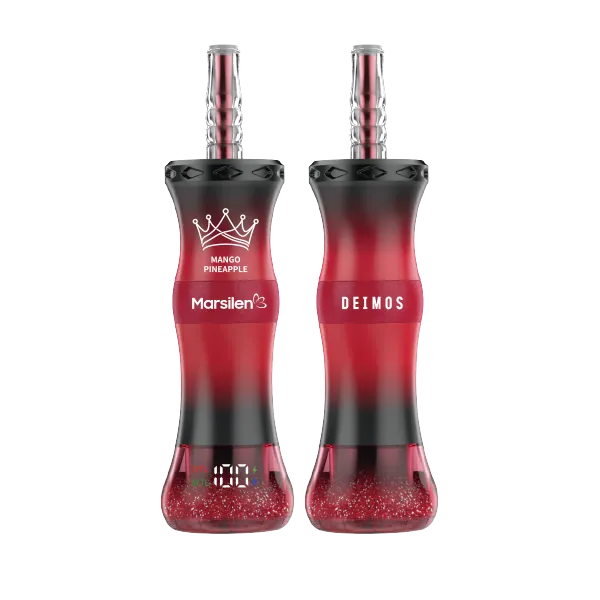
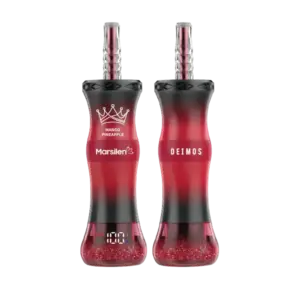
The Deimos page lists a 200K manufacturer-published puff rating, 60 mL published liquid capacity, 1,200 mAh rechargeable battery and DTL/MTL operation. Marsilen also says the 200K figure is a published product-artwork rating, not an independent test result or fixed guarantee.
So “80K vs. 200K” by itself tells you very little. The liquid capacity, battery and draw format are different too.
If you are still deciding what type of device makes more sense, the disposable vs refillable vape comparison is more useful than comparing headline puff numbers alone.
Have a question about your current device?
Keep the exact model name and a description of what happened ready. For visible faults, clear photos or a short video can help support review the issue.
How Many Vape Puffs Equal One Cigarette?
There is no reliable fixed conversion.
You may see rules such as “10 vape puffs = 1 cigarette.” The problem is that vape puffs are not all the same. Device power, nicotine concentration and puff duration can all change nicotine yield.[8]
If someone smokes 20 cigarettes a day, multiplying 20 × 10 gives 200 vape puffs. The calculation is easy. The 10-puff assumption is the weak part.
If you are moving away from cigarettes, track cigarette use separately. FDA says adults who smoke may reduce exposure to many harmful chemicals by switching completely from cigarettes to e-cigarettes. Long-term dual use can still cause harms similar to, or in addition to, cigarette smoking.[9]
Is 100 or 200 Puffs a Day Too Much?
There is no evidence-based line that makes 100 puffs “safe,” 200 “normal,” or 300 “too much.”
Use puff count to watch your own pattern instead.
If your normal count keeps climbing, also pay attention to stronger cravings, difficulty stopping or needing more nicotine to get the same effect. CDC lists craving, trouble stopping and tolerance among signs linked with nicotine addiction.[10]
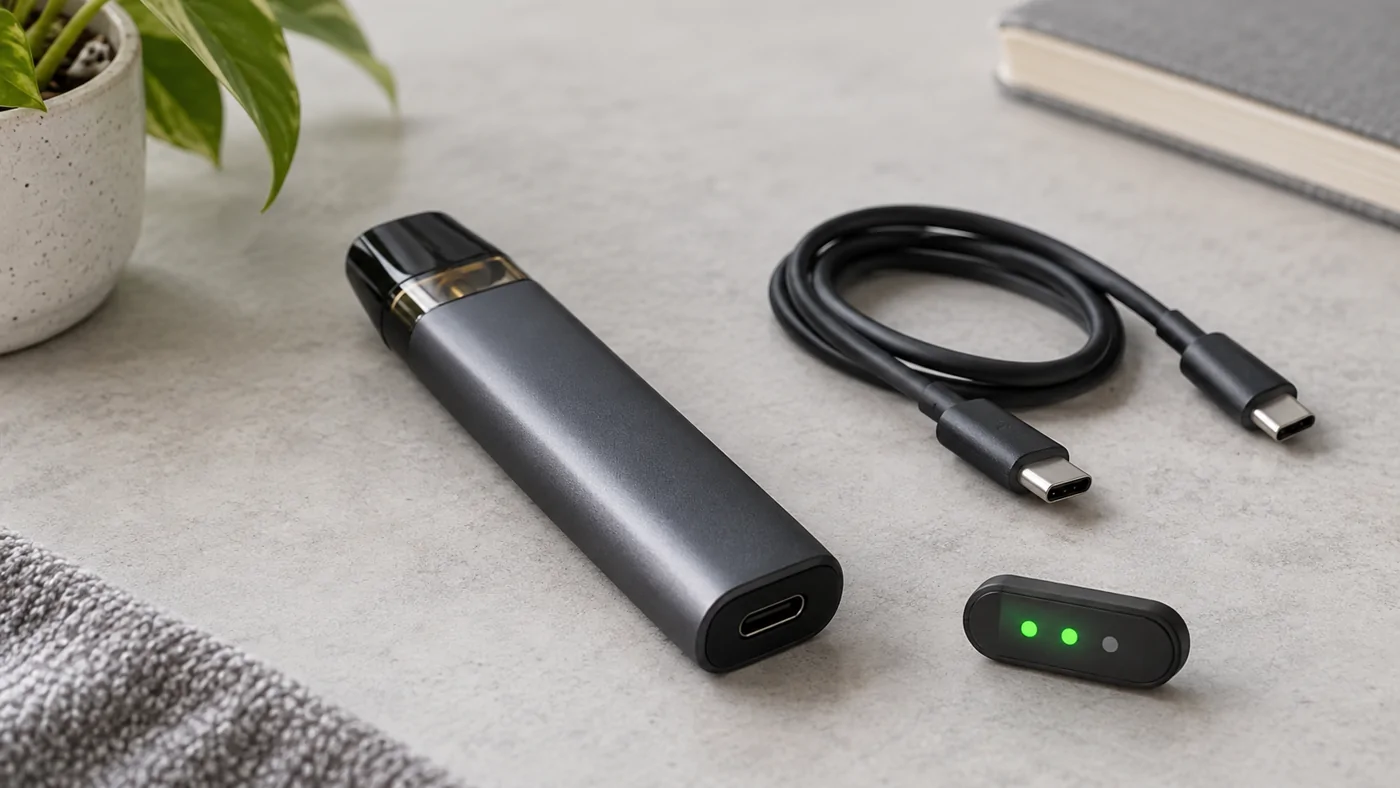
What Numbers Should You Check Before Choosing a Vape?
- Puff rating: the manufacturer’s estimated capacity.
- Nicotine strength: the nicotine concentration in the e-liquid.
- E-liquid volume: how much liquid the device contains.
- Battery capacity: useful when comparing rechargeable models.
- Device format: pre-filled, refillable, MTL and DTL devices feel and work differently.
- “Up to” wording: read it as an estimate, not a guaranteed personal total.
For charging, draw style and basic setup, see the first-time vape pen guide.
What If Your Goal Is to Quit Smoking?
Puff calculations are useful for comparing device capacity. They are not a quit-smoking plan.
FDA-approved options include nicotine patches, gum and lozenges sold over the counter, prescription nicotine sprays and inhalers, and prescription medicines such as varenicline and bupropion.[11]
No e-cigarette has been FDA-approved as a smoking-cessation aid.[12]
Adults who have never smoked or used tobacco products should not start using e-cigarettes.[13]
Frequently Asked Questions
How many puffs should a vape have?
Multiply your usual daily puff count by the number of days you want the device to cover. If you use around 150 puffs a day, 30 days works out to about 4,500 puffs.
How many puffs per day is normal?
There is no established “normal” or safe daily puff number. Puff duration, device power and nicotine strength can all change exposure.
How long do 5,000, 10,000 and 20,000 puffs last?
At 200 puffs a day, 5,000 advertised puffs works out to about 25 days, 10,000 to about 50 days and 20,000 to about 100 days. Real device life can be different.
Is 200 puffs a day safe?
No evidence-based safety limit says 200 puffs a day is safe. A puff counter also cannot tell you exactly how much nicotine your body absorbs.
How many vape puffs equal one cigarette?
There is no reliable fixed conversion. Nicotine strength, device power and puff duration vary too much from one setup to another.
Does a higher puff count mean more nicotine?
Not by itself. A higher puff rating mainly means more advertised capacity. Nicotine delivery also depends on liquid strength, device output and how you use the device.
Bottom Line
Average daily puffs × number of days = your rough puff-capacity target.
Then check nicotine concentration, e-liquid volume, battery and device type. Puff count is useful for estimating capacity. It cannot tell you exactly how much nicotine you absorb, convert neatly into cigarettes or define a safe daily vaping limit.