










Added to Cart
Blood tests can show whether nicotine has entered your body, including exposure you did not knowingly choose. Cotinine levels can help assess recent exposure and track changes after you stop. A product label cannot do that. However, a single blood test cannot calculate your exact absorbed dose, count your puffs, identify a brand, or prove that a label is wrong.[1]
Product Strength Is Not Your Absorbed Dose
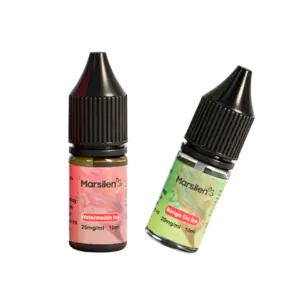
A liquid labelled 20 mg/mL contains 20 milligrams of nicotine per millilitre. If the container holds 2 mL, its stated total is 40 mg. That does not mean the user absorbs 40 mg. Some liquid may remain unused, and the amount reaching the body depends on the device and how it is used.
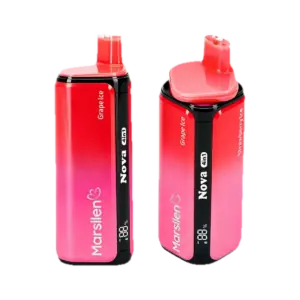
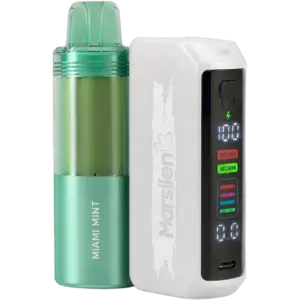
The NOVA 4in1 listing describes four separate flavour positions. Switching positions does not start a separate exposure record in your body: a cotinine test reflects nicotine from all the products and positions used, not each flavour individually.
| Question | What the label provides | What testing can add |
|---|---|---|
| How much nicotine is in the liquid? | A stated concentration, such as 20 mg/mL. | Blood testing cannot verify the liquid’s concentration. That requires testing the product. |
| Has nicotine entered my body? | No personal exposure measurement. | Nicotine or cotinine above the test’s detection limit provides evidence of exposure. |
| Has my exposure changed? | The stated strength may stay the same. | Repeat cotinine measurements can help assess a change when sampling conditions are comparable. |
| Which product caused the result? | The identity of the labelled product. | Cotinine alone cannot separate cigarettes, vapes, pouches and nicotine medicines. |
Nicotine and cotinine measurements must be interpreted alongside the products used and the timing of use. Neither is a direct readout of absorbed milligrams.[1]
What Nicotine and Cotinine Show
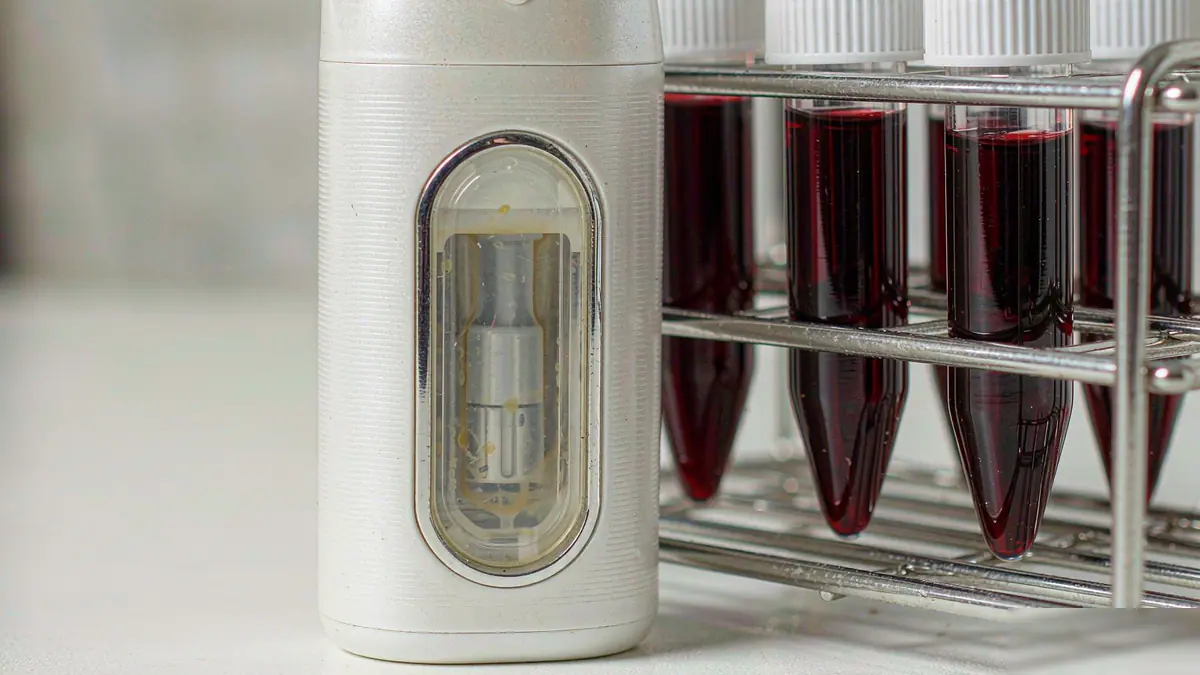
Nicotine gives a shorter view. Its blood half-life is about two hours, so the interval between use and sampling has a large effect on the result. A low reading several hours later does not rule out earlier use.
Cotinine gives a longer view. The body produces it as nicotine breaks down. Its average half-life is around 16 hours, although reported individual values range from about eight to more than 30 hours. This makes it more useful than nicotine for assessing exposure over several days.[1]
Why Detection Times Vary
In a published simulation, a starting cotinine concentration of 300 ng/mL fell below a 15 ng/mL cutoff after approximately 35, 70 or 130 hours, depending on whether the assumed half-life was eight, 16 or 30 hours. These are modelled examples, not guaranteed clearance times.[1]
A result therefore cannot pinpoint the last cigarette or vape session. For an abstinence check, follow the testing programme’s instructions rather than assuming that everyone tests negative after three days.
Exposure You Did Not Choose
Blood cotinine can reveal nicotine absorption in people who report no personal nicotine use. In U.S. NHANES data from 2015–2018, 20.8% of nonsmoking adults met the study’s definition of secondhand smoke exposure. The analysis used serum cotinine alongside questionnaire responses that excluded recent tobacco and nicotine-product use.[2]
That study used 0.05–10 ng/mL as its exposure range. It was a population-research definition, not a universal diagnostic scale. A reading within that range cannot, by itself, distinguish secondhand exposure from occasional use or nicotine remaining after someone stops.
If a nonsmoker receives an unexpected result, record household and workplace exposure, all nicotine medicines, and any recent product use before discussing it with a clinician. The number alone cannot identify the room, person or event responsible.
Why Similar Labels Can Produce Different Results
Product specifications describe different parts of a device. The Phobos Pro page lists 15 mL capacity and adjustable airflow. The Phobos Pro+ page lists 18 mL and a dual-mesh coil. Those figures describe liquid capacity and hardware—not the nicotine dose delivered to a particular user.
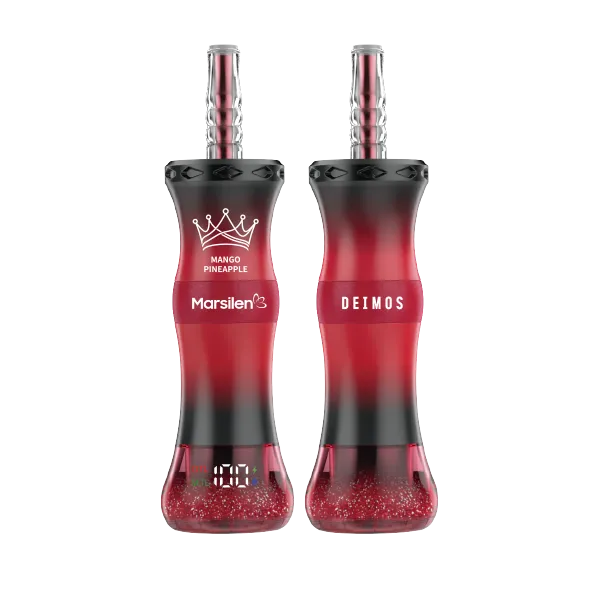
The Deimos listing includes DTL and MTL operation. If someone changes their draw style, session length or frequency, recording that change is more useful for interpreting a later result than assuming the nicotine label tells the whole story.
Biology also affects the result. Genes, hormones and other factors influence nicotine metabolism. In specialised research or clinical assessment, the ratio of 3′-hydroxycotinine to cotinine can provide information about metabolism. It is not an addiction score, and a research cutoff should not be used to adjust nicotine intake without medical advice.[3]
Can Testing Separate Smoking From Other Nicotine Use?
A positive cotinine result does not prove cigarette smoking. Nicotine patches, gum, pouches and nicotine-containing vapes can also produce it. When the source matters, a clinician may select additional tests rather than ordering the same panel for everyone.[1]
| Additional test | What it can help assess | Important limitation |
|---|---|---|
| Exhaled carbon monoxide | Recent exposure to combustion. | Traffic exhaust, other smoke and environmental sources can affect it. It is a breath test, not a cotinine blood test. |
| Urinary anabasine or anatabine | Tobacco exposure during pharmaceutical nicotine treatment. | Some tobacco-derived e-liquids contain these compounds, which can complicate interpretation. |
| Urinary NNAL | Exposure to a tobacco-specific carcinogen over a longer period. | It can reflect cigarettes, smokeless tobacco or secondhand smoke. It is not specific to burning tobacco and can persist long after use stops. |
These tests have different detection windows. They cannot be combined into a simple rule that identifies every nicotine source with certainty.[1]
How to Prepare for a Useful Test
Before the appointment, photograph the nicotine label and write down the following details. They help prevent a result from being interpreted without its context.
- Every nicotine source: cigarettes, vapes, pouches, patches, gum and lozenges.
- Timing: the date and approximate time of the last use, plus any use after a planned stop date.
- Recent changes: a different liquid strength, device, draw setting or pattern of use.
- Other relevant information: secondhand exposure, medicines and pregnancy, where applicable.
- The purpose: exposure assessment, treatment follow-up or a specific preoperative requirement.
Identify the actual device and liquid, not just the order name. A Phobos Pro Kit purchase and a separate Phobos Pro/Pro+ Battery purchase describe different items; a battery purchase alone says nothing about the liquid strength used.
Reading the Report
Check the sample type, measured substance, units and laboratory cutoff. Blood, saliva and urine results should not be compared using a fixed conversion factor. Urine concentrations also depend on dilution, and laboratories may measure free cotinine or total cotinine.[1]
Hypothetical example: a person stops smoking but continues using a nicotine patch. Their cotinine remains detectable. That result is compatible with patch use; it does not establish that they resumed smoking. The clinician needs the treatment history and, if necessary, a different marker.
For surgery, ask the clinical team whether its requirement concerns smoking, all nicotine use or a particular test result. Do not stop prescribed cessation treatment solely to change a laboratory number.
What a Blood Test Cannot Prove
- Exact intake: one result cannot reliably convert into milligrams, puff counts or cigarettes per day.
- Label accuracy: an unexpected result may justify investigating a product, but only product analysis can measure its actual nicotine concentration.
- Addiction severity: dependence assessment includes cravings, withdrawal and difficulty controlling use—not just a blood concentration.
- Overall safety: a nicotine or cotinine test does not measure the full range of harmful substances in smoke or aerosol.
Suspected Poisoning Needs Immediate Help
If someone swallows e-liquid, contact a poison centre immediately. Do not wait for a blood test or try to calculate a safe amount. In the United States, call Poison Control at 1-800-222-1222; elsewhere, use your local poison service. Call emergency services for seizures, collapse or breathing difficulty. For skin contact, wash thoroughly with soap and water.[4]