











Added to Cart
30K, 80K and 200K usually mean published or advertised puff ratings of about 30,000, 80,000 and 200,000 puffs. On paper, 80K is 2.67× 30K. A 200K rating is 2.5× 80K and 6.67× 30K.
That part is simple. What gets messy is turning those numbers into real use. A puff count is a capacity rating, not a promise that every person will get the same number of draws.
| Rating | Published Puffs | Difference | Increase |
|---|---|---|---|
| 30K | 30,000 | Baseline | — |
| 80K | 80,000 | +50,000 vs 30K | +166.7% |
| 200K | 200,000 | +120,000 vs 80K | +150% |
If you want to compare them properly, look at the e-liquid capacity, battery, coil, airflow, operating mode and nicotine strength too. The puff number is only one part of the picture.
What Counts as One Puff?
A puff is not a fixed amount of e-liquid.
One person may take a quick 1-second draw. Someone else may hold the draw for 5 seconds. Both still count as one puff, even though the device is working very differently in each case.
CORESTA’s standardized machine-vaping regime uses a 55 mL draw volume, a 3-second puff and one puff every 30 seconds, with a square-shaped puff profile.[1]
That 55 mL number is the volume drawn through the device during the puff. It is not 55 mL of e-liquid.
People are much less consistent than machines. One natural-use study looked at 4,723 puffs from 21 participants. Participant-average puff duration was roughly 1–7 seconds, while average inhaled puff volume ranged from about 29 to 388 mL.[2]
The same study recorded daily use ranging from 24 to 1,091 puffs, with a cohort mean of 225 puffs per day.[3] That does not mean 225 puffs is “normal.” It mainly shows how different one user can be from another.
| Measured Factor | Observed Result |
|---|---|
| Puffs analyzed | 4,723 |
| Participants | 21 |
| Participant-average puff duration | Roughly 1–7 seconds |
| Participant-average puff volume | About 29–388 mL of draw volume |
| Daily puff count | 24–1,091 |
So when a box says 30K, 80K or 200K, read it as a product rating. Do not read it like a mechanical counter that will always stop on that exact number.
How Long Would 30K, 80K and 200K Last?
You can get a rough number with a simple calculation:
Published puff rating ÷ daily puffs = theoretical days
| Illustrative Usage | 30K | 80K | 200K |
|---|---|---|---|
| 200 puffs/day | 150 days | 400 days | 1,000 days |
| 400 puffs/day | 75 days | 200 days | 500 days |
| 600 puffs/day | 50 days | 133 days | 333 days |
These are math examples only. They are not expected lifespans or recommended daily use.
Take the 200K example. At 400 counted puffs a day, the math says 500 days. In real life, that does not mean the coil, flavor and battery behavior will stay exactly the same for 500 days.
Why the Real Puff Count Changes
| Variable | What Changes | Effect |
|---|---|---|
| Puff duration | The coil stays active longer | More liquid can be vaporized per counted puff |
| Power | More energy reaches the coil | Higher output can increase aerosol and liquid use |
| Airflow | Draw resistance and puff volume change | Aerosol output and consumption can change |
| Coil design | Heating area and heat transfer change | Liquid use can differ between devices |
| Operating mode | Eco, Normal, Boost or similar modes use different output | The highest puff rating may apply only to a lower-output mode |
| Coil condition | Heating and wicking change over time | Flavor or vapor can drop before the liquid is empty |
A 5-second draw lasts 2.5× as long as a 2-second draw. That does not mean it will use exactly 2.5× the liquid, but clearly those two puffs are not the same.
What Do 30K, 80K and 200K Look Like on Real Devices?
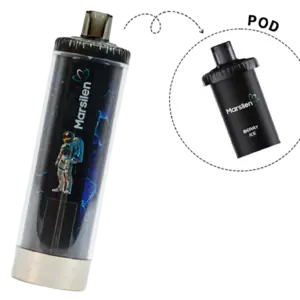
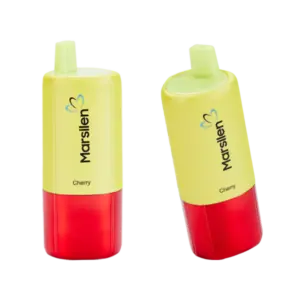
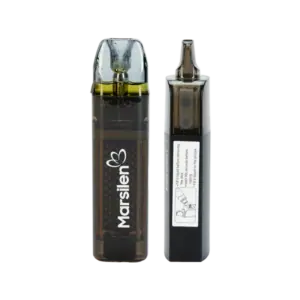
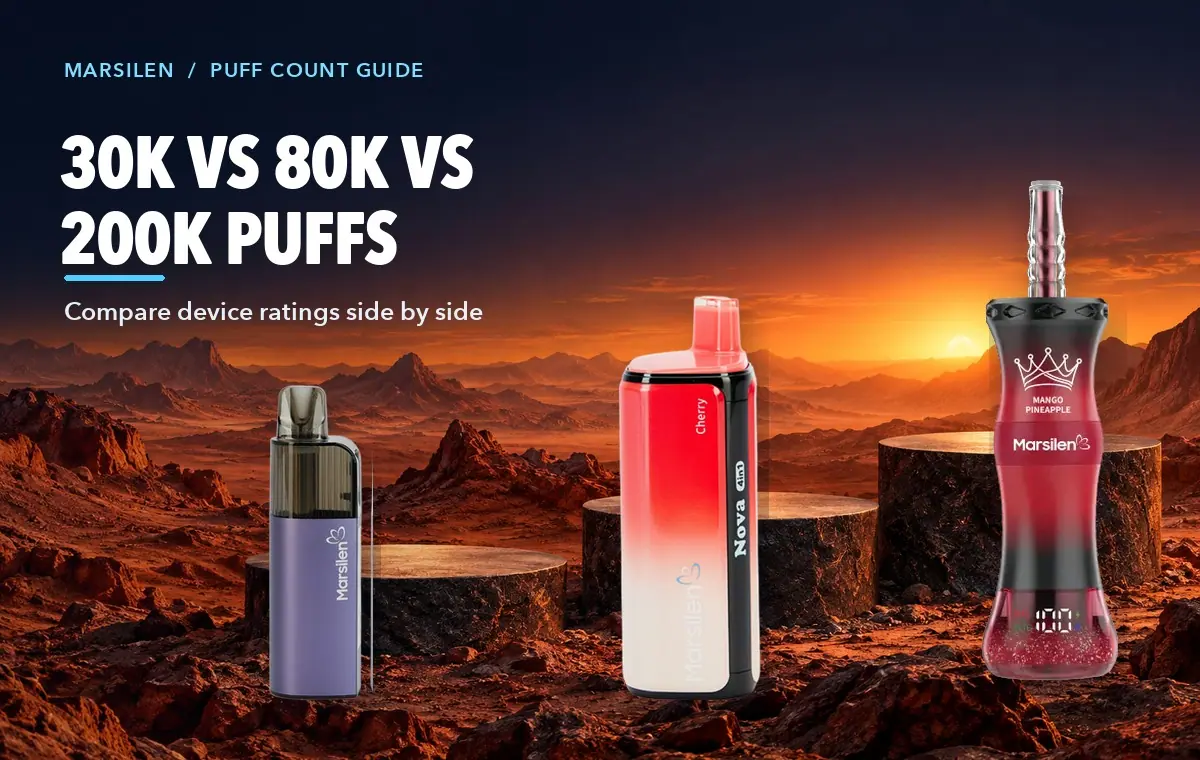
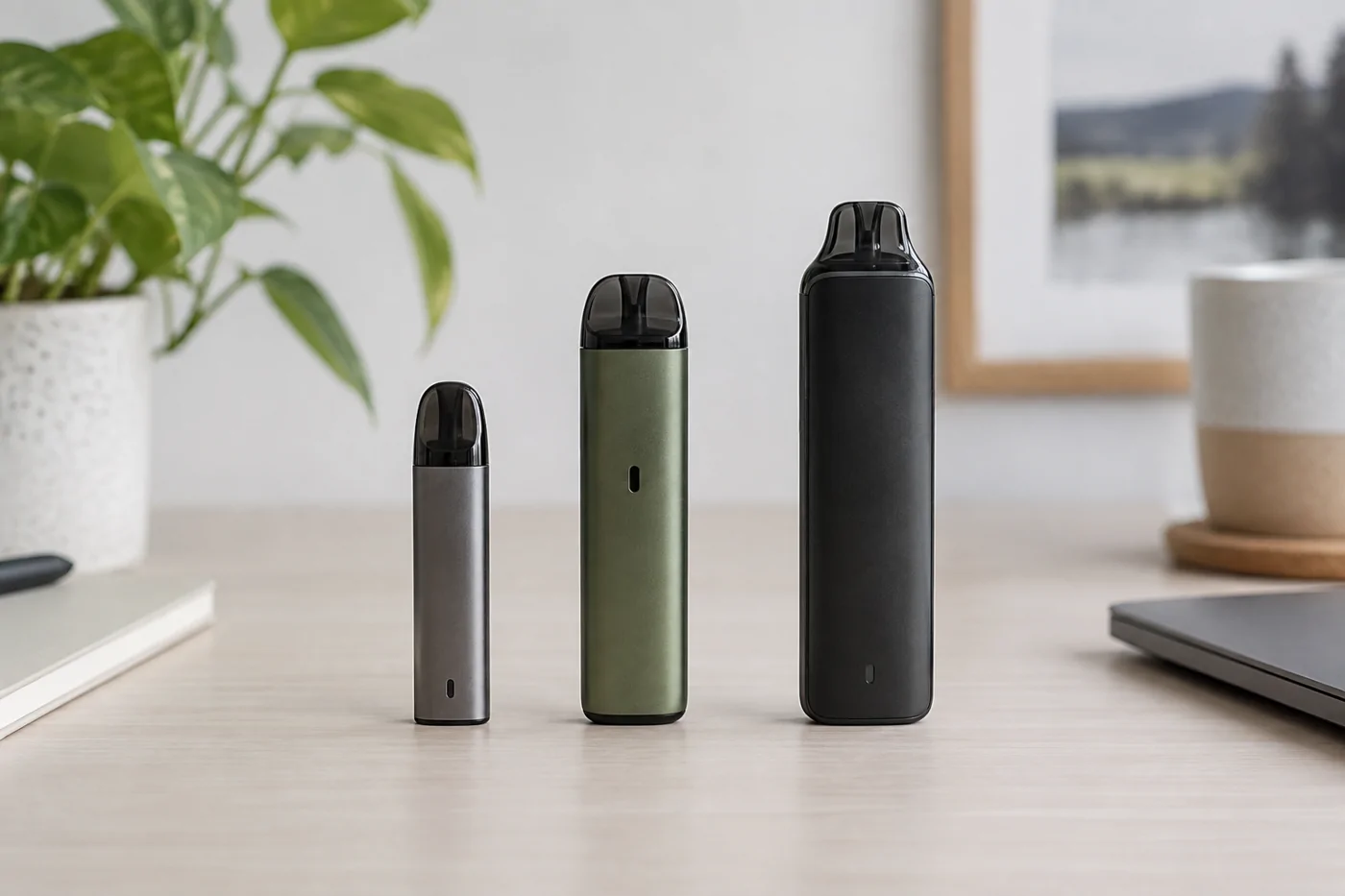
Three current Marsilen models make the differences easier to see.
| Model | Puff Rating | Published Liquid Capacity | Battery | Format |
|---|---|---|---|---|
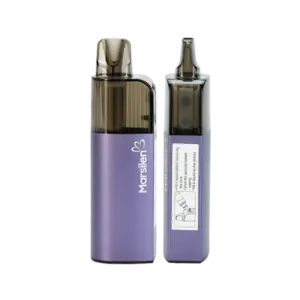
| Mars PRO 30K | Up to approximately 30,000 across 3 fills | 10 mL refillable pod | 600 mAh | Refillable |
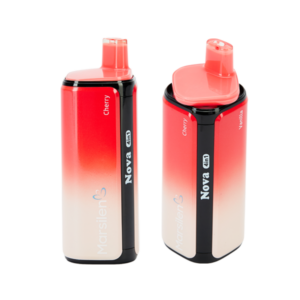
| NOVA 4in1 | Up to 80,000 | 4 × 10 mL / 40 mL total | 650 mAh | 4 selectable pre-filled chambers |
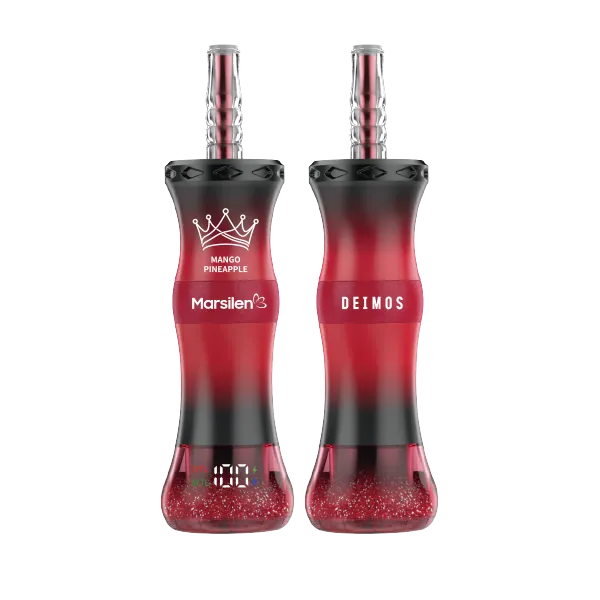
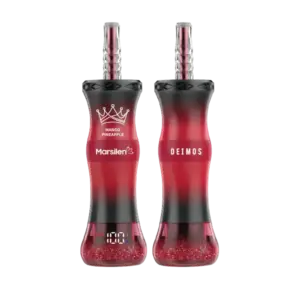
| Deimos | 200K published rating | 60 mL published capacity | 1200 mAh | DTL / MTL |
Mars PRO 30K is rated at up to roughly 30,000 puffs across three nominal 10 mL fills:
30,000 ÷ 30 mL = about 1,000 advertised puffs per nominal mL
NOVA 4in1 lists 40 mL total and up to 80,000 puffs:
80,000 ÷ 40 mL = 2,000 advertised puffs per nominal mL
Deimos lists 60 mL and a 200K published rating:
200,000 ÷ 60 mL ≈ 3,333 advertised puffs per nominal mL
| Model | Nominal Liquid Used in Calculation | Derived Advertising Ratio |
|---|---|---|
| Mars PRO 30K | 30 mL across 3 fills | ~1,000 advertised puffs/mL |
| NOVA 4in1 | 40 mL | 2,000 advertised puffs/mL |
| Deimos | 60 mL | ~3,333 advertised puffs/mL |
These are calculated advertising ratios, not measured e-liquid consumption rates.
The difference is pretty big. The three ratios run from about 1,000 to 3,333 advertised puffs per nominal mL. That is why “1 mL = X puffs” is not a reliable rule.
The same numbers also show why 200K cannot be explained by liquid capacity alone. NOVA lists 40 mL. Deimos lists 60 mL. That is a 50% increase in liquid, while the puff rating rises from 80K to 200K, or 150%.
Something else is changing too: the device design, output, airflow, coil setup or the assumptions behind the puff rating.
Need guidance for your current device?
The Help Center covers charging, weak flavor, airflow and leaks. Read the common support answers for guidance on device issues.
How Should You Compare 30K, 80K and 200K?
| Check | What It Tells You | What It Does Not Tell You |
|---|---|---|
| Puff rating | Published capacity figure | Exact real-world lifespan |
| E-liquid capacity | Nominal liquid available | A fixed number of puffs per mL |
| Puffs per nominal mL | How the puff claim compares with liquid capacity | Measured human consumption per puff |
| Battery mAh | Battery capacity between charges | Total device puff count |
| Operating mode | Whether power output changes | That one puff rating applies to every mode |
| Coil | Heating-system design | Guaranteed coil or flavor life |
| Nicotine concentration | Nicotine concentration in the e-liquid | Nicotine absorbed from each puff |
| Market SKU | The exact version being sold or ordered | That the same global product page applies everywhere |
Quick check: divide the puff rating by nominal liquid capacity. If two products show a big gap in advertised puffs per mL, they are clearly not using one fixed puff-to-liquid relationship.
Does a Bigger Battery Mean More Puffs?
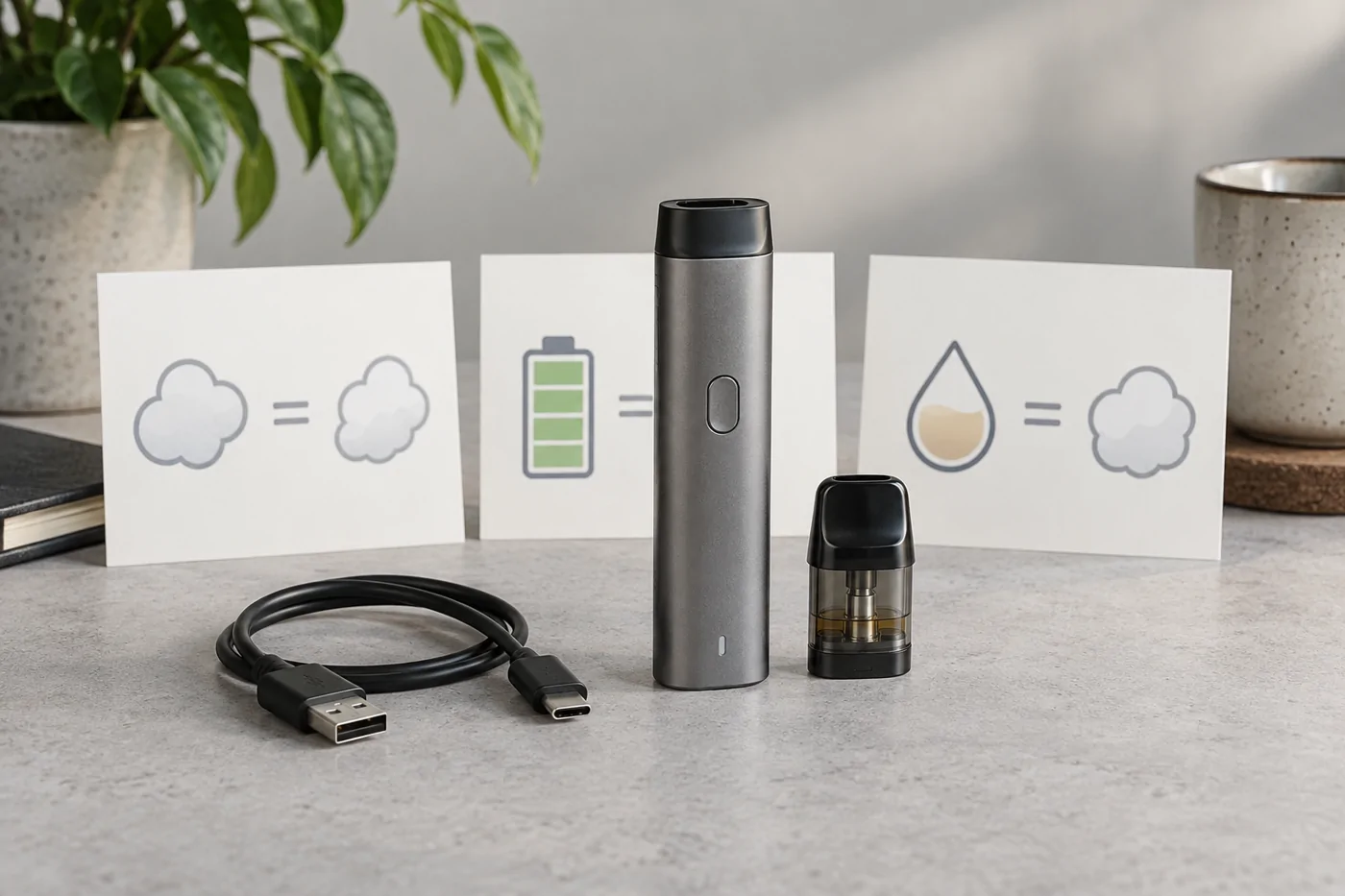
Not directly. Battery mAh and puff count measure different things.
Mars PRO 30K lists a 600 mAh battery. NOVA 4in1 lists 650 mAh. Deimos lists 1200 mAh.
NOVA’s battery is only about 8.3% larger than the 600 mAh battery in Mars PRO 30K, but its published puff rating is 166.7% higher.
The reason is simple: a rechargeable vape can be charged again and again while liquid is still left inside. Use mAh to judge battery capacity between charges, not total puff life.
Does a Bigger Puff Number Mean Stronger Nicotine?
No. Puff count and nicotine concentration are separate numbers.
FDA says nicotine is highly addictive and can change how the brain works, creating cravings that reinforce continued use.[4]
Puff count tells you the published capacity of the device. Nicotine concentration is usually shown separately in mg/mL or as a percentage.
If you want to calculate the nicotine contained in the original liquid, you need at least the liquid volume and nicotine concentration:
Liquid volume × nicotine concentration = nicotine contained in the original liquid
Example:
10 mL × 20 mg/mL = 200 mg of nicotine in the liquid
That is nicotine in the liquid, not nicotine absorbed by the body.
You also cannot divide 200 mg by 30K, 80K or 200K and call the result a reliable human dose per puff. Real puff volume, aerosol output and use patterns vary too much.
Is 30K Safer Than 200K?
No. Puff count is not a safety rating.
CDC states that no tobacco product, including e-cigarettes, is safe. E-cigarette aerosol can contain nicotine and potentially harmful substances, including metals, volatile organic compounds and fine particles.[5]
A lower puff number does not prove lower risk. A higher number does not prove higher risk either.
Adults who do not currently use tobacco products should not see a larger puff count as a reason to start vaping.
Can You Compare Puff Counts Across Brands?
You can compare the numbers. You cannot automatically compare the real lifespan.
Say one device is rated at 80K and another at 100K:
100,000 ÷ 80,000 = 1.25
The 100K claim is 25% higher.
Before calling it 25% longer-lasting, check:
- e-liquid capacity;
- puff duration used for testing;
- power or operating mode;
- coil configuration;
- airflow;
- whether the number is an “up to” claim;
- how the manufacturer decides when the device has reached the end of usable life.
If those details are missing, you are comparing two marketing numbers, not two standardized lifespan measurements.
Does Puff Count Tell You Whether a Vape Can Be Sold in Your Market?
No. Puff count says nothing about regulatory status.
Product configuration, nicotine strength, packaging and legal requirements can vary by country. A global product page does not prove that the exact same SKU can be sold everywhere.
In the United States, FDA keeps an official list of e-cigarettes authorized for lawful marketing. FDA also states that marketing authorization does not mean a tobacco product is safe or “FDA approved.”[6]
If you are importing or distributing, check the exact SKU, nicotine specification, packaging and available market documents before placing the order.
Frequently Asked Questions
What does 30K puffs mean?
30K means a published or advertised rating of about 30,000 puffs. It does not guarantee that every user will get exactly 30,000 draws.
What does 80K puffs mean?
80K means about 80,000 advertised puffs. That is 2.67× the 30K rating.
What does 200K puffs mean?
200K means a published rating of about 200,000 puffs. That is 2.5× 80K and 6.67× 30K.
Does 200K really mean 200,000 real puffs?
It means the product carries a 200K published puff rating. Real use can be lower or different because puff length, puff volume, power, airflow and test conditions vary.
How many puffs are in 1 mL of e-liquid?
There is no fixed answer. The three Marsilen examples above work out to about 1,000, 2,000 and 3,333 advertised puffs per nominal mL. Those are calculated advertising ratios, not measured human consumption rates.
30K vs 80K vs 200K: The Answer
30K, 80K and 200K are puff-capacity ratings. They are not guarantees of 30,000, 80,000 or 200,000 identical real-world draws.
80K is 2.67× 30K. 200K is 2.5× 80K and 6.67× 30K. After that first comparison, look at the e-liquid capacity, operating mode, coil, airflow, battery and nicotine concentration.
A quick reality check is to divide the puff rating by the nominal liquid capacity. If two products show very different advertised puffs per mL, do not assume their puff claims are based on the same usage conditions.
Need help with a device you already have?
Contact product support with the model name and a clear description of the issue. Include photos or a short video when the problem is visible.
Adult-use product information. Nicotine is addictive. Product specifications, nicotine strength, availability and permitted configurations can vary by market. Confirm the exact SKU and applicable local requirements before purchase, import or resale.