










Added to Cart
Nicotine exposure means contact with nicotine through inhalation, swallowing, or skin contact. Nicotine absorption is the amount that crosses those surfaces and enters the bloodstream. A liquid containing 20 mg/mL has 20 mg of nicotine in each milliliter. That does not mean the body absorbs all 20 mg.
Nicotine Exposure vs. Absorption
| Comparison | Nicotine exposure | Nicotine absorption |
|---|---|---|
| What it describes | Contact with nicotine in smoke, aerosol, liquid, or another product. | Nicotine crossing the lungs, mouth, digestive tract, or skin into the blood. |
| What can be measured | Air concentration in μg/m³, liquid concentration in mg/mL, and contact duration. | Absorbed dose in mg, or blood nicotine levels in ng/mL. Cotinine provides indirect evidence of nicotine intake. |
| A practical example | A cigarette’s tobacco contains about 10–14 mg of nicotine on average. | Smoking one cigarette delivers about 1–1.5 mg into the bloodstream on average, with variation in smoking behavior. |
The cigarette figures come from a pharmacology review by Benowitz and colleagues. They illustrate why the nicotine in a product and the nicotine absorbed by a person are different quantities.[1]
What a Nicotine Label Can Tell You
For liquid, multiply concentration by volume to calculate nicotine content:
20 mg/mL × 1 mL = 20 mg of nicotine in the liquid.
This calculation gives product content—not the dose absorbed by the user.
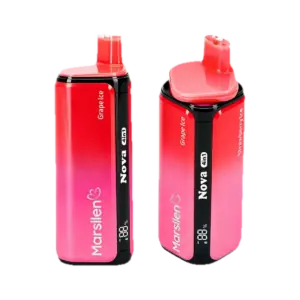
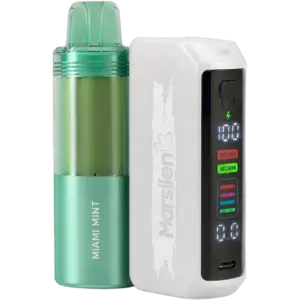
The NOVA 4in1 listing, for example, states 20 mg/mL. Its flavor selector changes the selected chamber; it does not measure nicotine entering the blood. Check the strength on the actual package because specifications can differ by market and version.
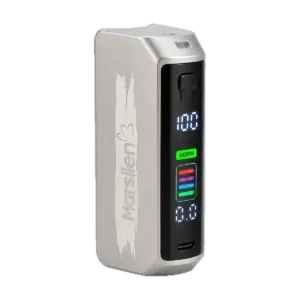
Liquid capacity is a separate figure. The published capacities for Phobos Pro and Phobos Pro+ are 15 mL and 18 mL respectively. Those numbers describe how much liquid the products hold. Neither number tells you the nicotine strength or the dose absorbed per puff.
A puff rating, battery capacity, or remaining-liquid display cannot fill that gap. For a package such as the Phobos Pro Kit, check the included liquid’s label rather than inferring strength from the kit name. A separately listed Phobos Pro/Pro+ battery provides power, not a nicotine-dose measurement.
How Nicotine Enters the Blood
Through the Lungs
When cigarette smoke reaches the lungs, nicotine is absorbed rapidly. After a puff, it can reach the brain in about 10–20 seconds. Puff volume, inhalation depth, and puff frequency affect intake. This timing comes from cigarette research; it should not be treated as a guaranteed delivery time for every vaping device.[1]
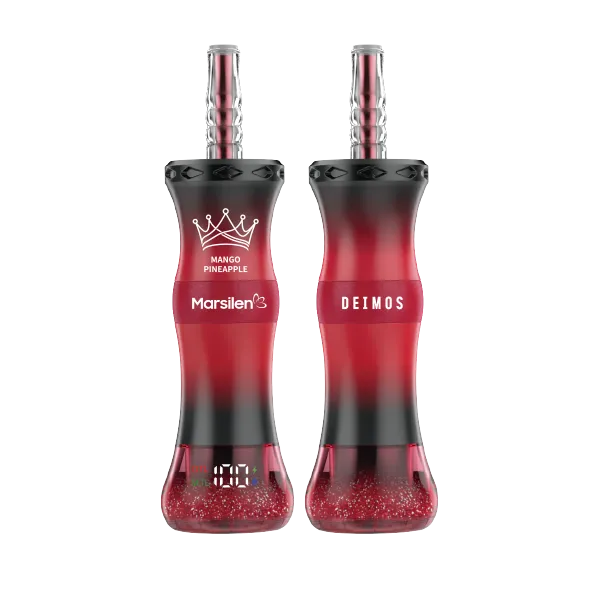
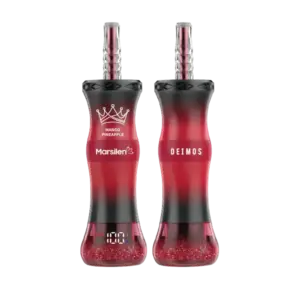
The Deimos listing includes mouth-to-lung and direct-to-lung operation. These describe draw styles, not fixed absorption rates. Switching the draw setting does not provide a reliable percentage change in nicotine dose.
Through the Mouth
Nicotine gum, lozenges, and oral tobacco products allow absorption through the mouth lining. Formulation, pH, and time in contact with the mouth affect delivery. Some nicotine is swallowed and then passes through the liver before reaching the wider circulation. One absorption percentage cannot accurately describe all these products.[1]
Through the Skin or Digestive Tract
Nicotine patches use controlled skin delivery. Spilled e-liquid does not: its concentration, contact area, and time on the skin are uncontrolled. Swallowed nicotine also passes through the digestive tract and liver, but reduced delivery into the bloodstream does not make swallowing e-liquid safe. The FDA warns that nicotine-containing liquids can cause serious injury or death in children.[2]
Why the Same Contact Can Produce Different Results
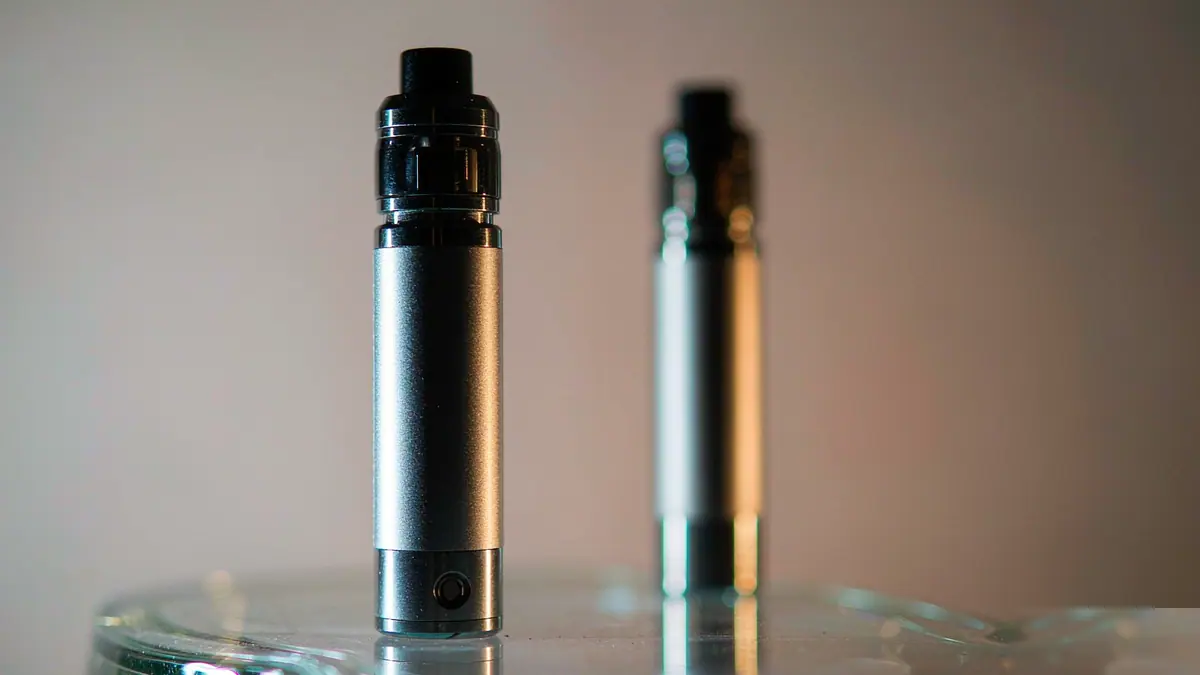
Two people using liquid with the same strength may absorb different amounts. One may take longer puffs, use more liquid, or use a device that produces more aerosol. Nicotine formulation also matters. Nicotine salts can allow high concentrations to be inhaled with less harshness than freebase nicotine; a smoother sensation is not evidence of a lower dose.[3]
Blood levels depend on both absorption and clearance. Nicotine’s average half-life is about two hours. In a simplified example with no further intake, a level of 10 ng/mL would fall to about 5 ng/mL after one half-life—not to zero. Individual metabolism changes that timing.[1]
What Nicotine Tests Actually Show
The body converts nicotine into cotinine, a commonly measured marker of nicotine intake. Cotinine lasts longer than nicotine, with an average half-life of about 16 hours. Its detection window depends on the starting level, individual metabolism, sample type, and test cutoff. There is no single “clear after three days” rule.[4]
| Test | What it helps assess | What it cannot establish alone |
|---|---|---|
| Air sampling or surface testing | Nicotine present in the sampled environment. | The amount a particular person absorbed. |
| Blood nicotine | Nicotine concentration near the time of sampling. | A complete record of earlier intake. |
| Blood, saliva, or urine cotinine | Evidence of recent nicotine intake. | The exact absorbed dose or whether nicotine came from cigarettes, vaping, replacement therapy, or secondhand exposure. |
| Exhaled carbon monoxide | Recent exposure to combustion, including cigarette smoke. | Nicotine intake from products that do not burn, such as nicotine patches. |
Blood, saliva, and urine results are not interchangeable. Use the laboratory’s units and reference information. A clinician should interpret the result alongside product use, secondhand exposure, and time since the last contact. A positive cotinine result alone does not prove cigarette smoking.[4]
Does Secondhand Exposure Mean Absorption?
Bystanders can inhale nicotine-containing aerosol exhaled by someone vaping. The amount absorbed depends on the emissions, ventilation, distance, and time spent nearby. There is no dependable conversion from “one hour in a car” to a fixed number of cigarettes or milligrams absorbed.[3]
Nicotine uptake also does not capture every health risk. Tobacco smoke contains more than 7,000 chemicals, including about 70 that can cause cancer. The CDC states that there is no safe level of secondhand tobacco smoke exposure. A low nicotine reading should not be treated as proof that the air is safe.[5]
What to Do After Accidental Contact
- E-liquid on skin: wash the area thoroughly with soap and water. Do not assume that washing within a particular number of seconds guarantees a safe absorbed dose.
- E-liquid in the eyes: rinse thoroughly with water. Seek medical attention for changes in vision.
- E-liquid swallowed: contact a poison information service immediately. In the United States, call Poison Control at 1-800-222-1222. Elsewhere, use the local poison service. Also seek advice if a child may have been exposed, even when the amount is uncertain.
These steps follow FDA advice. Keep the packaging available so the poison service can check the concentration and ingredients.[2] For collapse, seizures, or trouble breathing, call emergency services immediately; do not wait to calculate a dose.
How This Article Was Prepared
Product examples were checked against the published Marsilen listings. Calculations show liquid content only. No hands-on device testing, blood testing, or customer case data were used. Medical statements are based on the sources below, not on product specifications or personal use claims.
These examples help explain labels, but they do not establish how much nicotine a particular device delivers to a person. That requires appropriate testing. This article has not been independently reviewed by a medical professional.
Sources
- Benowitz, Hukkanen, and Jacob — Nicotine Chemistry, Metabolism, Kinetics and Biomarkers. A pharmacology review covering nicotine content, absorption routes, metabolism, and biomarkers.
- FDA — How to Properly Store E-Liquids and Prevent Accidental Exposure of E-Liquids to Children. Guidance on storage, skin and eye contact, and contacting Poison Control.
- CDC — About E-Cigarettes. Information on aerosol, nicotine salts, and bystander exposure.
- Benowitz and colleagues — Biochemical Verification of Tobacco Use and Abstinence: 2019 Update. Guidance on cotinine, sample types, detection windows, and the limits of test interpretation.
- CDC — About Secondhand Smoke. Evidence on smoke constituents, health risks, and smoke-free environments.